


They did not fail to see it. They saw it, and they chose their pensions.
There is a particular kind of evil that does not announce itself. It does not kick down a door. It sits in a meeting, reads a file, understands exactly what the file means, and then decides that the safest thing for its own career is to do nothing. It signs off. It moves the paper to the bottom of the pile. It goes home to its own children, tucks them in, and sleeps.
I want to be careful at the very start, because this is a subject where anger is cheap and accuracy is expensive, and I would rather spend the expensive one. So let me tell you what I am not doing. I am not standing outside the gates with a torch shouting about people I have decided to hate. I am working from a document the British government commissioned, wrote, and published. Baroness Louise Casey’s National Audit on Group-based Child Sexual Exploitation is not a tabloid. It is not a campaign leaflet. It is the state, under oath to itself, describing what the state did. And what it describes is not incompetence. Incompetence is forgivable. What it describes is choice.
Hold those two things in your head, because the whole argument lives in the gap between them. Incompetence is when you try to protect a child and fail. Betrayal is when you understand the child is being raped and you decide that saying so is bad for community relations. One of those deserves sympathy. The other deserves a name.
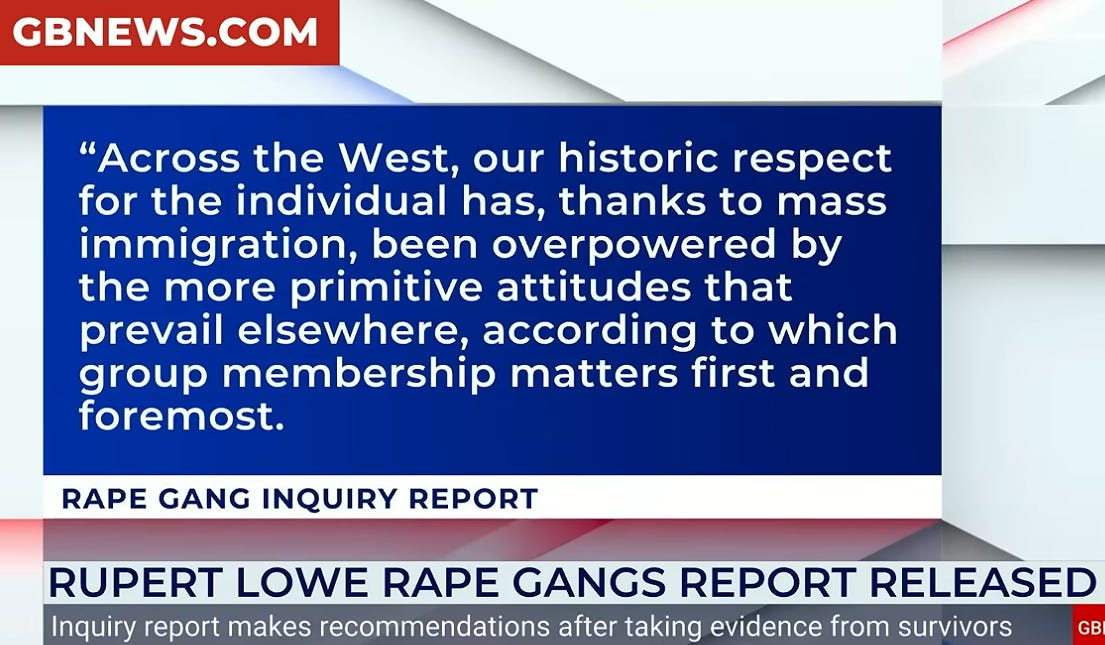
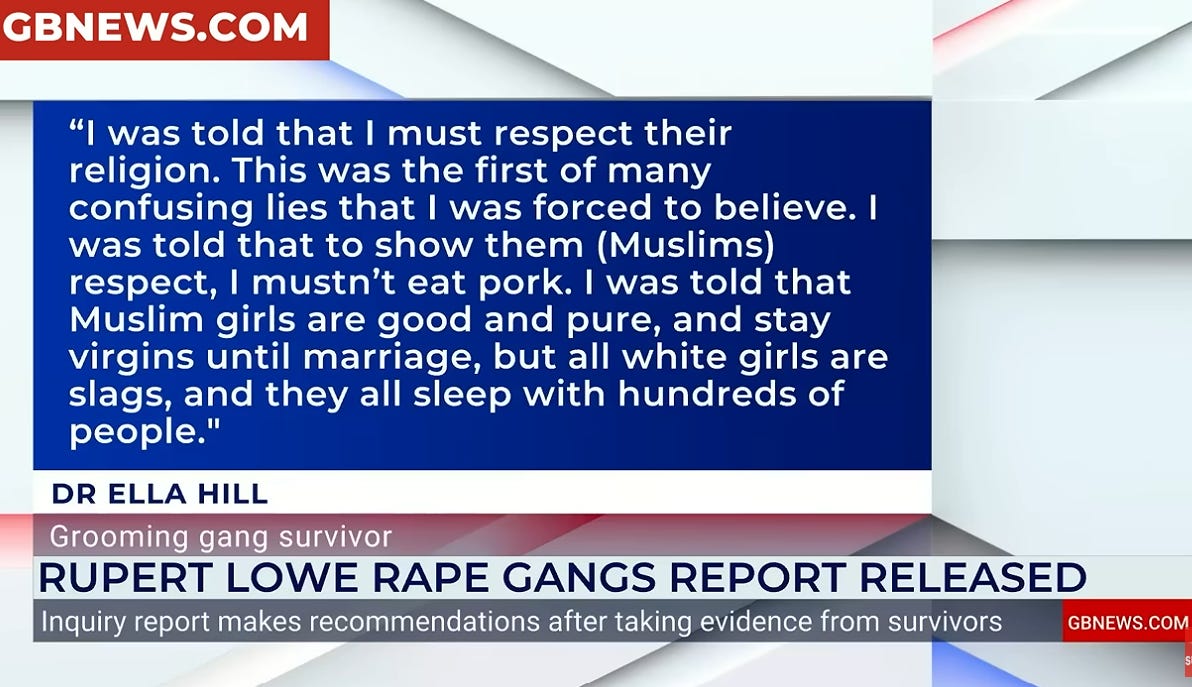
The Casey audit gives it a name. It calls what happened in Rotherham, in the state’s own words, a record where the people responsible were, at best, turning a blind eye, and at worst, actively enabling abuse. Read that twice. Actively enabling. That is not my phrase. That is the audit’s assessment of a police force, written by the woman the government sent to find out the truth. And people like Tommy Robinson who the establishment locked away in solitary confinement without a proper trial and without due process for daring to expose this Rape Gang scandal that the government was desperate to cover up.
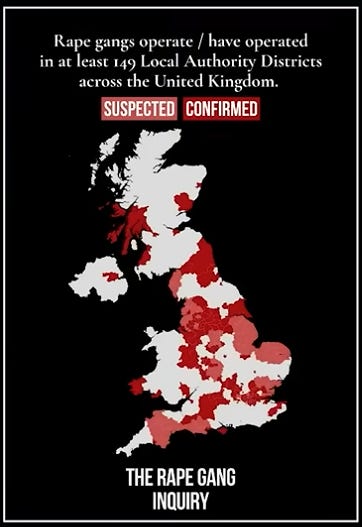
I keep returning to one number, because it is the number that ends every excuse. In Rotherham, the independent police complaints process eventually examined 265 separate allegations made by more than fifty complainants about how the police handled child sexual exploitation. Two hundred and sixty-five. And after all of it, after the years and the investigations and the eight-year inquiry that followed, the count of officers who lost their jobs was zero. Not one. The Police and Crime Commissioner himself said the process had failed to identify any individual accountability, and that as a result it lets down victims and survivors. But what about corporate accountability or culpability? What about obligations and duties to the public? What about your oaths of office? Is no one accountable simply because you all are guilty?
You cannot get to zero by accident. Accident produces a scatter. Some sackings, some demotions, some quiet retirements, some exonerations. Zero is a pattern. Zero is what a system produces when the system has decided in advance that no one will be held to account, because holding someone to account would mean admitting what was allowed to happen, and admitting what was allowed to happen would damage the institution. So the institution protected itself. It protected itself with the bodies of children.
The oath was the whole point
Every one of these people took on a duty. Not a vague, ambient, we-are-all-responsible duty. A specific one. A police officer swears to serve with fairness, integrity, diligence and impartiality, to protect life and property. A council places its most vulnerable children, by law, into its own direct care, and becomes what the law actually calls the corporate parent. A social worker holds a statutory duty to safeguard. A prosecutor has a duty to bring charges without fear or favour. These are not feelings. They are obligations with a signature underneath them.
And here is the thing about a duty. The whole reason it exists is for the hard day. Nobody needs an oath to do the easy thing. You do not need to swear a solemn promise to help a child who is easy to help, who comes from a stable home, whose parents will show up at the station and make a noise. The oath is there precisely for the child nobody will make a noise about. The girl in care. The girl who has gone missing eleven times. The girl who is, in the language the audit condemns, treated as a difficult teenager rather than a raped child. The oath exists for her, or it exists for nothing.
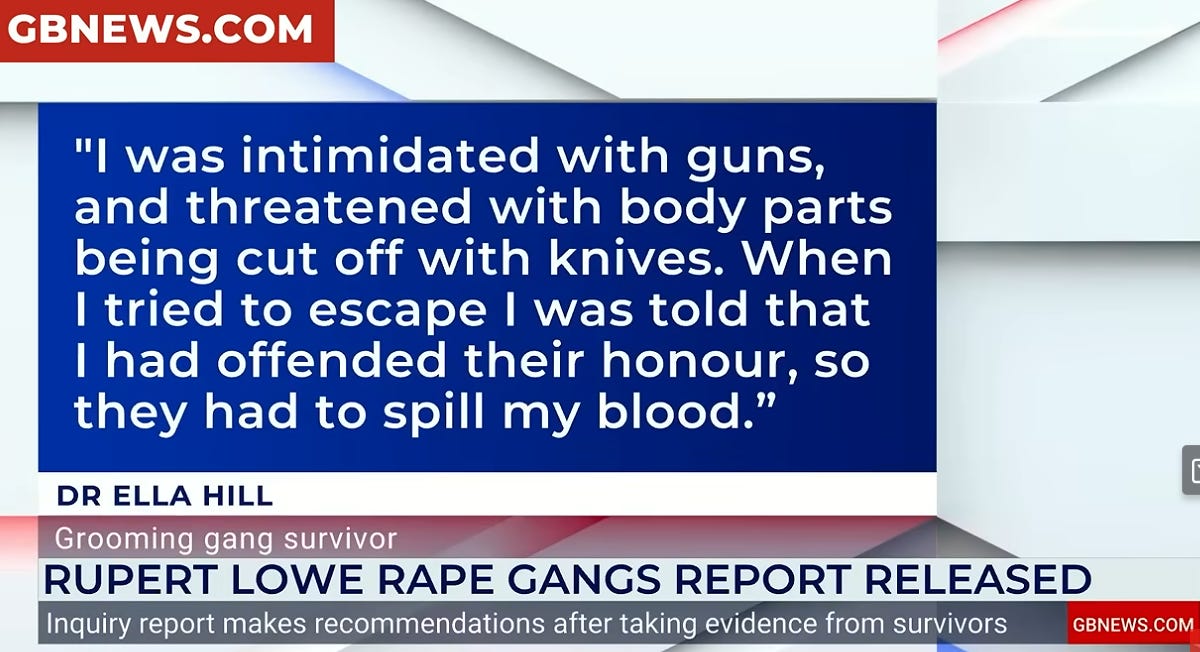
That is what makes this a betrayal rather than a tragedy. A tragedy is when the storm is bigger than the wall. A betrayal is when the people paid to be the wall step aside and let the water through because standing firm would have cost them something. And the audit is painfully clear about what it would have cost them. It would have cost them the discomfort of recording an uncomfortable truth. It would have cost them a difficult conversation about community cohesion. It would have cost them the risk of an accusation. Set that price against what the children paid, and you understand the exact exchange rate these officials worked with. Their mild discomfort was worth more to them than a child’s body.
The careerist in the meeting
I want you to picture one person, because systems are made of persons and the word system is where accountability goes to hide. Picture the official in the meeting. Not a monster. That is the point. A monster would be easier. Picture an ordinary, mortgaged, middle-managed human being with a pension three years off and a promotion in view, sitting in front of a report that describes children being passed between men for sex.
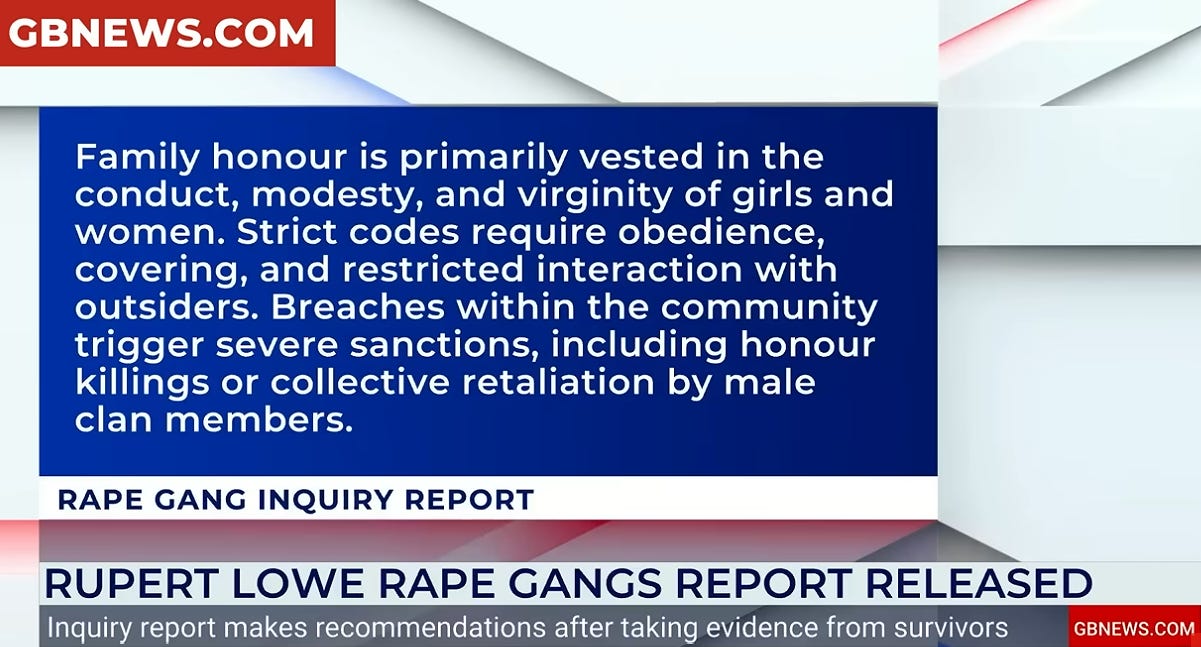
This person is not stupid. The audit is explicit that the warnings were not subtle. Frontline workers, the audit records, were sometimes overwhelmed by what they were seeing. A health team in Rochdale made over a hundred referrals. Whistleblowers stood up and were, in the audit’s account, met with hostility and the threat of legal action. The information was on the table. The girls were named. The cars were logged. In Rotherham a youth worker handed the police names, addresses, and car registration plates, and was told it was not real intelligence.
So the careerist in the meeting is not failing to understand. He understands perfectly. He is performing a calculation. If I write this down as what it is, the calculation runs, there will be a storm. There will be questions about why my service did not act sooner. There will be a community-relations problem that will land on my desk. There will be a headline with my name near it. Whereas if I file it softly, if I let the words go vague, if I let her be a teenager making poor lifestyle choices rather than a child being raped by a gang, then the storm never comes, and in three years I retire with the dinner and the carriage clock.
He chose the clock. They all, in their thousands of small decisions across a quarter of a century, chose the clock. And the most damning sentence in the entire audit is the quiet one that confirms the calculation paid off. The audit records that survivors watched as people in power who denied their abuse go on to get promotions or take early retirement with no accountability for their actions. The promotion came through. The retirement was comfortable. The arithmetic worked. That is the betrayal in its purest form: not that they did not know, but that they knew, and they had run the numbers, and the numbers told them a child was cheaper than a scandal.
What it cost the people it was meant to protect
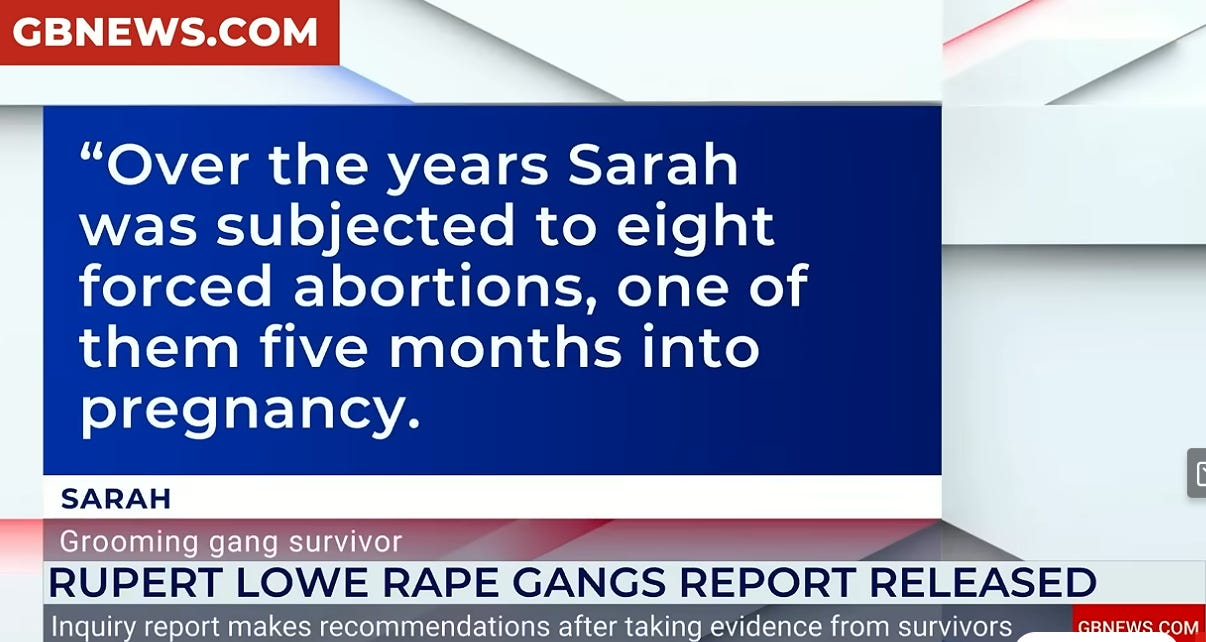
We should be concrete about the other side of that ledger, because abstraction is the careerist’s best friend and I will not lend it to him. The audit, drawing on the earlier Jay report, describes what the children actually endured. Girls as young as eleven raped by multiple men. Children doused in petrol and threatened with being set alight. Children made to witness brutally violent rapes and told they would be next. Pregnancies. Forced terminations. And then, on top of the abuse itself, a second betrayal, the one that this article is about, where the very people who were meant to be the rescue became another set of adults who looked at the child and turned away.
And it did not end when the abuse ended. Some of these children were arrested for offences they committed while being controlled by their abusers, and carried the criminal records into adult life. The audit notes that survivors have been left unable to get a bank account, or unable to go on their own children’s school trips, because of convictions they received as children while being raped. Sit with the full shape of that. The state failed to protect them as children, then criminalised them for the consequences of that failure, then let the criminal record follow them for decades, while not one of the officials who allowed any of it lost a single day’s pay.
That is not a system that made mistakes. That is a system that, when forced to choose between the comfort of the powerful and the safety of the powerless, chose the powerful every single time, and then protected the choosers.
Why mercy is the wrong response
I am, by conviction, a person who believes in mercy. I believe people can be forgiven almost anything, that the worst of us are not beyond redemption, that grace is the deepest fact about the universe. So understand that it costs me something to say what I am about to say.

Mercy is for the repentant. Mercy is for the person who turns around, faces what they did, names it, and asks to be held to account. That is the one thing none of these officials did. They did not come forward. They were dragged forward, years late, by journalists and whistleblowers and the parents of dead and broken children, every inch of the way resisting. When the truth came for Rotherham, the council’s instinct was not confession. According to the audit’s account, the council sought an injunction to stop a newspaper publishing, and then asked the police to launch a criminal inquiry into who had leaked the information, rather than into the men abusing the children. Faced with the choice between the abuser and the person who exposed the abuse, they went after the person who exposed it.
You cannot extend mercy to a refusal to repent, because there is nothing there to receive it. Mercy offered to an unrepentant betrayal is not mercy. It is permission. It tells the next careerist in the next meeting that the calculation still holds, that the clock is still safe, that a child is still cheaper than a scandal. Every official who walked away with a pension and no accountability is a lesson taught to the official who comes after. The lesson is: you can do this, and nothing will happen to you. Until that lesson is unlearned, in public, with names and consequences, it will be taught again, and there will be more children on the other side of the ledger.
This is why accountability is not vengeance. Vengeance is about the past, about making someone hurt because they hurt others. Accountability is about the future, about making the calculation come out differently for the next person who sits in that meeting with that file. The point of holding the betrayer to account is not to satisfy our anger. It is to put a cost on the careerist’s side of the scale, so that the next time a frightened, mortgaged, pension-counting official looks at a report describing a child being raped, the safe choice and the right choice are finally the same choice.
The line that should follow them
The Casey audit ends with the government accepting, on paper, all twelve of its recommendations. A national operation. A statutory inquiry with the power to compel witnesses. A duty to share information. The machinery of seriousness is being assembled, and that is not nothing.
But machinery is not the thing that failed. Machinery never is. The thing that failed was a human being in a chair, with a duty and a signature and a choice, who decided that the child in the file was less important than the comfort in his own life. No inquiry recommendation reaches into that chair. Only accountability does. Only the certain knowledge that the choice will be found, named, and answered for can change what the next person decides when the next file lands.
So here is the line I would have follow every one of them, the careerist and the council and the constable and the prosecutor who traded a child for a quiet life. You did not fail to see it. You saw it, and you decided your pension was worth more than her childhood. And a society that lets you keep both the pension and your good name has not learned the lesson. It has only filed it, softly, at the bottom of the pile, exactly the way you taught it to.
There is a great deal more to say about how this was allowed to happen, about the concealment that turned a failure into a cover-up, and about the ideology that taught a generation of officials to fear an accusation more than they feared a child’s suffering. Those are the next two parts of this series. But the first thing, the thing that has to be said before any of the rest, is the simplest and the hardest. They knew. And no mercy is owed to a betrayal that has never once asked for it.
If you value unflinching, historically grounded analysis that mainstream outlets soften or ignore, consider upgrading. Paid subscribers get:
Several new, full-length articles every week.
Carefully researched pieces you won’t find elsewhere.
Full access to the complete premium archive
Archive of in-depth writing, research, and commentary — all in one place.
Entry into the subscriber chat
A private space for serious readers and thoughtful discussion.
Thanks for reading. This post is public, so feel free to share it. A. C. Rosenthal writes on comparative religion, Islamic theology, and the relationship between Christianity and modern Western culture. This work is entirely reader-supported. By choosing a paid subscription, you allow me to continue this long-form research to bring these vital stories to light. Thank you for helping this Lion roar for truth. A.C. Rosenthal is the author of The Two Muhammads: What History and Manuscripts Reveal About the Islamic Dilemma, The God They Rejected Isn’t Real: Exposing the False Gods of Modern Doubt, and The Carpenter’s Son and the Imam’s Son. Further analysis at:
acrosenthal.com/
https://thetwomuhammadscurriculum.thinkific.com/
I read these posts knowing that the result will once again be my blood boiling. It is a most uncomfortable feeling because the rage it generates is almost uncontrollable. I see the pictures of those 15 scum and I think how is it possible they are still breathing? I think of the officials who looked away from this and about them I think the same. This Rape Gang Report must lead to the most severe punishment for all those found to be involved. The demons who committed the acts need to be drawn and quartered ever so slowly. And the officials that looked away should face either hanging for the worst of them and life in prison for the others. Anything less is not justice in my mind.
I'm sorry, but I see a bullet hole in the forehead of each of those 15 animals in the picture above. Don't tie up the legal system with appeals. If convicted, take them out of the courthouse and shoot them. How difficult is it to see that if you rape a woman or a child you deserve to die? Forgive me, but the culture than spawns these people is shit. The people who allowed them in belong in prison.