



The opposite of faith was never doubt. It was not caring. And you are still here, still arguing, still bothered. That means you want truth more then platitudes.
You have probably been told, somewhere along the way, that your doubt puts you on the far side of a line. Believers on one side, skeptics on the other, and the more questions you ask the further from faith you stand. It is a tidy picture. It is also wrong, and the way it is wrong matters more than almost anything else I could tell you about where you actually stand.
The opposite of faith is not doubt. The opposite of faith is indifference. And whatever else is true of you, you are not indifferent.
Sit with the difference for a second, because it is sharper than it sounds. The genuinely indifferent person does not argue about God. They do not read about God. They do not click on essays like this one to see what the writer gets wrong. They do not lie awake with the question, do not get into it at dinner, do not feel the old irritation rise when someone says something smug in either direction. They have not thought about it in years, and they would be mildly puzzled that you still do. That is indifference. That is the real opposite of faith, and you are nowhere near it.
You are the one still asking. Still bothered. Still unable to give the question the clean burial that some of your secular friends seem to manage without effort. And I want to suggest that this persistence is not a flaw in your skepticism. It is the most interesting fact about your situation, and it points somewhere.
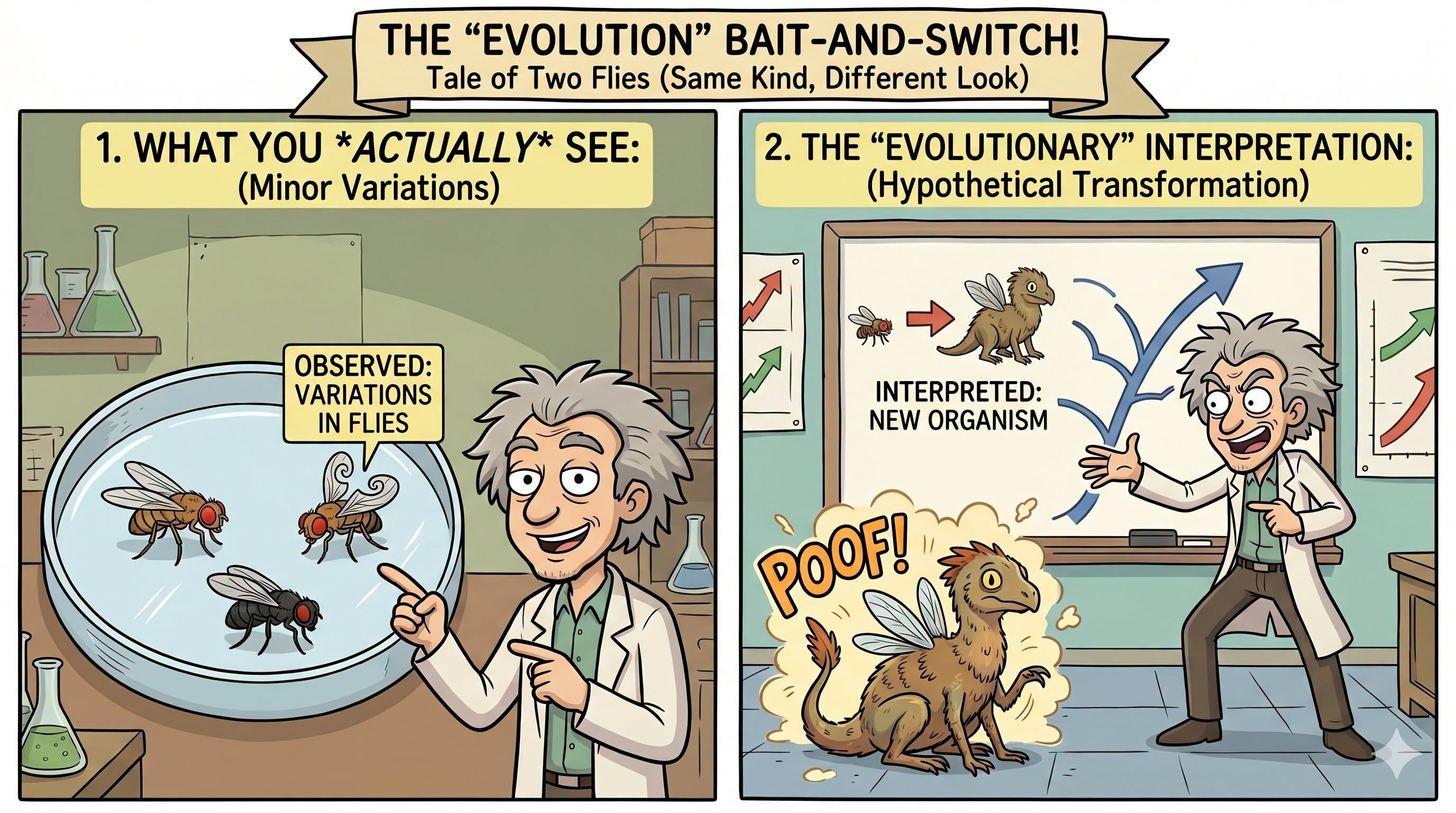
They show you a laboratory experiment where scientists breed fruit flies. After thousands of generations, some of the flies end up with minor variations—like curly wings or a darker body color. Then they point at the petri dish and proudly declare: "Look! Evolution is a proven fact happening right before your eyes!"
Let’s look at what actually happened versus what they interpret happened:
The fruit fly started as a fruit fly, and it ended as a fruit fly. No new genetic information was created. It's just a shuffle or a loss of what God already put in its DNA. That’s observable science!
They take that minor variation and use it to claim that, given millions of years, that fly will turn into a completely different kind of creature altogether.
Don't let them trade observable adaptation for unobservable science fiction! God created every creature to reproduce "after their kind"—and that is exactly what the real-world evidence shows.
Start with a small group in the book of Acts that Scripture praises for the exact thing churches neglect in favor of “good”. For the pursuit of “good” is often at the cost of pursuit of what is best. Like a shepherd having empathy for the starving wolves, who if he feeds, will only grow stronger and more bold.
So Paul comes to a town called Berea and makes his case. The people there do not simply believe him. They go home and check. They take what this traveling preacher has said and they hold it up against the Scriptures, daily, examining whether the claims actually hold. They refuse to take his word for it. They investigate.
You would expect the text to scold them for this, the way doubters often get scolded. It does the opposite. Luke calls them noble. The Greek word is eugenes, the word you would use for someone of fine and honorable character. Their refusal to swallow the claim whole, their insistence on examining it for themselves, is held up as the admirable posture, more admirable than the crowd in the previous town who had simply reacted. Scripture commends the people who checked.
Let that land if you have spent any time being made to feel that your need to examine things is a spiritual defect. It is not. By the Bible’s own account it can be the posture that puts you closest to the truth, because it is the posture of someone actually paying attention rather than someone going along.
There is one honest catch, and I will name it because pretending otherwise would be a cheat. The Bereans examined and then they believed. The examination was the road, not the address. They were not professional questioners who made a permanent home in the asking. They checked, and the checking led somewhere, and they followed it there. So the model is not endless inquiry held up as a virtue in itself. The model is rigorous, honest inquiry that stays open to arriving. Keep that filed away. We will come back to it.
Here is something that should reset the playing field, because the playing field is tilted in your imagination in a way it is not tilted in reality.
You have likely absorbed the idea that the believer is the one taking a leap and the skeptic is the one standing on solid demonstrated ground. Faith requires a jump; unbelief is just sober refusal to jump. But look closely at what each position actually claims. The person who says “there is no God” is not reporting a laboratory result. That is a claim about the whole of reality, about everything that exists and everything that could, and it reaches far past anything the scientific method can deliver. And the believer who says “God is love” is making a claim no instrument can measure either. Both have stepped beyond what can be strictly proved. Both are standing on a commitment that exceeds the evidence. But only one has the predictive power to anticipate the evidence, the other claims it in a just so manner.
This is not a trick to drag the believer and the skeptic down to the same muddy level so nobody can claim anything. It is the opposite. It means the real question is not which side has airtight proof, because neither does. The real question is which step the available evidence better supports. That is a question you can actually investigate, with the Berean posture, without anyone getting to pretend they are the only one being rational.
And when you do investigate, you run into witnesses you did not expect. Witnesses who had every reason to testify the other way.
Fred Hoyle was not a man looking for God. He was one of the great astronomers of the twentieth century, the one who worked out how the elements heavier than hydrogen and helium get forged inside stars, and he was, for most of his life, a committed atheist who at one point wrote that religion was a desperate attempt to escape the dreadful situation we find ourselves in. He coined the term “Big Bang,” and he coined it as a sneer, because he did not even like the theory. This is not a sympathetic witness for the faith. This is a hostile one.
And his own work cornered him. Hoyle was studying how carbon forms in stars, and carbon is not optional. Without it there are no long molecules, and without those there is no life of any kind, anywhere. He found that carbon can form in the furnaces of stars only because of an extraordinarily precise coincidence in the nuclear physics, a value tuned so exactly that if it were off by a little, the universe would have almost no carbon and therefore no living things to wonder about it. He had not gone looking for this. The data handed it to him, and it unsettled him, and by his own account he went looking for ways around it.
He could not find one that satisfied him. And so this lifelong atheist wrote a sentence that has been quoted ever since, not because a preacher put it in his mouth but because he put it in his own. A common sense interpretation of the facts, he wrote, suggests that a superintellect has monkeyed with physics, as well as with chemistry and biology, and that there are no blind forces worth speaking about in nature. The numbers, he said, seemed to him so overwhelming as to put the conclusion almost beyond question.
Notice what Hoyle is and is not. He is not a convert. He did not fall to his knees, did not join a church, did not end his days a Christian, and I am not going to pretend he did. He squirmed against his own conclusion to the end. But that is precisely what makes him worth hearing here. This is not a believer reading God into the data because he wanted God there. This is a skeptic who wanted God to stay out of it, looking at his own life’s work, and finding that the evidence would not let him keep the door fully shut. The design pressed on him from inside the science, against his preference, and he was too honest to deny that it pressed.
That is what sustained, honest examination does. It does not always deliver the answer you were braced for. Sometimes it pulls a determined unbeliever halfway across a line he never meant to approach, and leaves him standing there, unsettled, unable to either cross it or pretend it is not there.
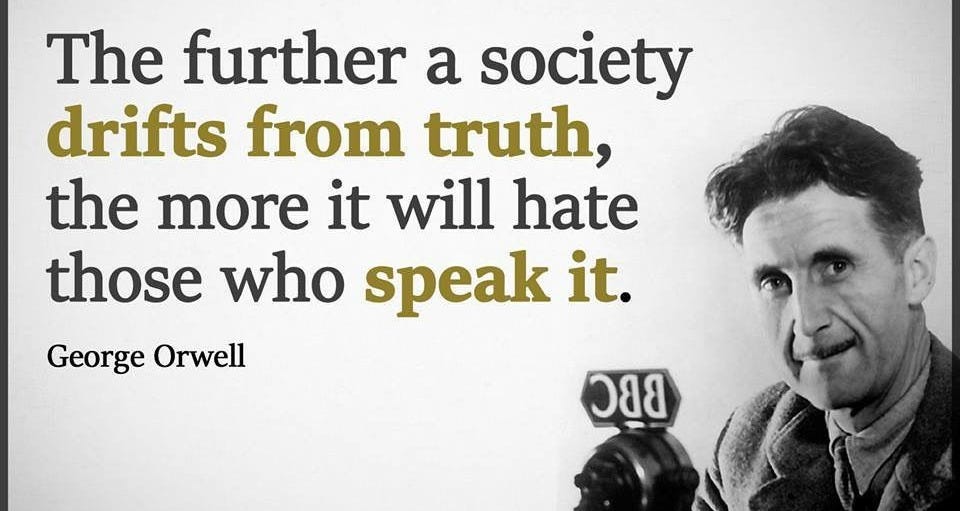
Which brings us back to you.
There is a line in the source book for this series that reorients the whole question, and I want to put it in front of you plainly.
Skepticism is not the opposite of faith. Indifference is. You are not indifferent. And that matters more than you think.
Think about what your own persistence actually means. You cannot be genuinely irritated by something you believe does not exist. Nobody loses sleep over the nonexistence of unicorns. Nobody argues passionately against leprechauns or feels a flash of anger when someone speaks confidently about them, because there is nothing there to push against. The things we are truly indifferent to generate no heat in us at all. They are simply absent from our inner life.
But God is not absent from yours. The question keeps coming back to you. You set it down and it returns. You think you have closed the matter and something reopens it, a death, a birth, a night sky, a sentence in a book, a moment of unaccountable beauty or unaccountable grief. The question that will not die may itself be telling you something. Not proof, not yet, but a clue worth taking seriously: that you are not arguing with a void. You are wrestling with a presence you have not yet named, and the wrestling is not the sign of your distance from faith. It may be the early experience, felt from the inside before you have words for it, of being drawn toward something that is already real, by someone who is already there.
The ancient promise is that those who seek with their whole heart will find. Not the tidy. Not the certain. The honest. Job sought honestly, with his fists up, and he found. The Bereans sought honestly, with their books open, and they found. Neither was serene. Both were earnest. And earnest seeking, Scripture insists, has a destination, because the One being sought is also, quietly, doing the drawing.
So I am not going to ask you for a decision. The whole point would collapse if I did. What I will ask is smaller and, I think, fairer.
First, keep examining, but examine both sides with the same rigor. Have you put the case for Christ under the same hard light you have put the case against it? Have you read the primary sources, looked honestly at the historical arguments for the resurrection, engaged the strongest form of the case for God rather than the weakest version that is easiest to knock down? The Bereans went home and checked the actual text. That is the standard. Skepticism that only ever audits one side is not skepticism. It is a verdict wearing skepticism’s coat.
Second, go find someone who is truly indifferent. Not an atheist who argues, but a person who simply has not thought about God in years and feels nothing about it either way. Stand next to that and notice how different it is from where you are. That difference is not nothing. It may be the most significant thing about your spiritual situation, and you have probably never measured yourself against it.
Third, just let the evidence land. Not believe it. Let it register. The order and intelligibility of the universe, the strange tuning Hoyle could not explain away, the moral weight you cannot actually live without, the figure of Jesus, the historical fact of a terrified band of disciples who became fearless almost overnight and died insisting they had seen him alive. Stop, for one honest hour, finding the immediate counter-move. Let the whole case sit there at once and ask yourself what it actually suggests when you are not rushing to defend against it.
If you are still skeptical after all that, good. Go away and think. Examine like a Berean. But notice, as you go, that the question keeps meeting you on the road. That it does not stay buried. That something keeps handing it back.
Sustained, honest skepticism is not a dead end. It has somewhere it leads. The only real question left is whether you are willing to arrive.
You were never indifferent. That was always the tell.
If this series has been worth your time, consider subscribing. It is reader-supported, and that is what keeps it going.
If you value unflinching, historically grounded analysis that mainstream outlets soften or ignore, consider upgrading. Paid subscribers get:
Several new, full-length articles every week.
Carefully researched pieces you won’t find elsewhere.
Full access to the complete premium archive
Archive of in-depth writing, research, and commentary — all in one place.
Entry into the subscriber chat
A private space for serious readers and thoughtful discussion.

Thanks for reading. This post is public, so feel free to share it. A. C. Rosenthal writes on comparative religion, Islamic theology, and the relationship between Christianity and modern Western culture. This work is entirely reader-supported. By choosing a paid subscription, you allow me to continue this long-form research to bring these vital stories to light. Thank you for helping this Lion roar for truth. A.C. Rosenthal is the author of The Two Muhammads: What History and Manuscripts Reveal About the Islamic Dilemma, The God They Rejected Isn’t Real: Exposing the False Gods of Modern Doubt, and The Carpenter’s Son and the Imam’s Son. Further analysis at:
acrosenthal.com/
https://thetwomuhammadscurriculum.thinkific.com/
1. The opposite of faith is not indifference, it is credulity. The Bible gives the definition of faith clearly, it is belief in the truth. 2. There are no atheists everybody believes in the god of the Bible. Romans 1 declares the first set of sinners as, "though they knew God" 3. God has chosen the method of proof for his Word. Prophecy! There are three that prove beyond a shadow of a doubt that the Bible is the word of God and everything in it is true. Prophecy one from Genesis 15 there are Jews you can see them. Prophecy two from Exodus Jews are scattered over the Earth. Prophecy three anti-semitism from the same place in Exodus.
Excellent article. Thank you